

Forklifts, Near-Misses, and the Invisibility of Risk
The transition from reactive to proactive safety isn’t just a goal anymore—in 2026, it’s the standard. In the high-stakes environment of a warehouse, the biggest “HSE gap” isn’t a lack of rules; it’s the invisibility of near-misses.
Manual logs only capture what someone saw and reported. AI-enabled, data-driven safety captures the 90% of risks that usually happen in the shadows. Think of AI as the safety manager who never needs a coffee break and has better peripheral vision than a chameleon.
Closing the HSE Gaps
Most warehouses suffer from “Safety Blindness”—we know accidents happen, but we don’t know where the next one is brewing. AI fills these gaps by:
- Converting Video to Data: Turning existing CCTV into a continuous stream of safety metrics.
- Predicting “Hotspots”: Using heatmaps to show where forklifts and pedestrians cross paths too often.
- Automating Accountability: No more “he said, she said.” You get objective data on speed, PPE, and zone breaches.
Common Scenarios & AI Fixes
| Scenario | The HSE Gap | The AI “Fix” |
|---|---|---|
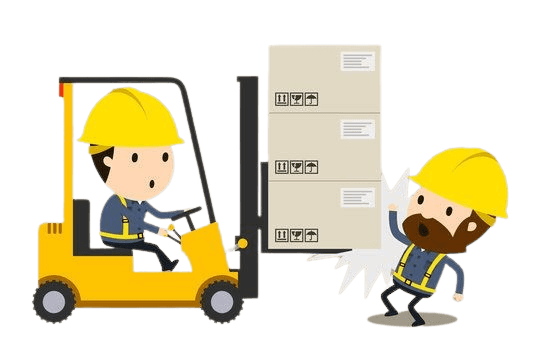
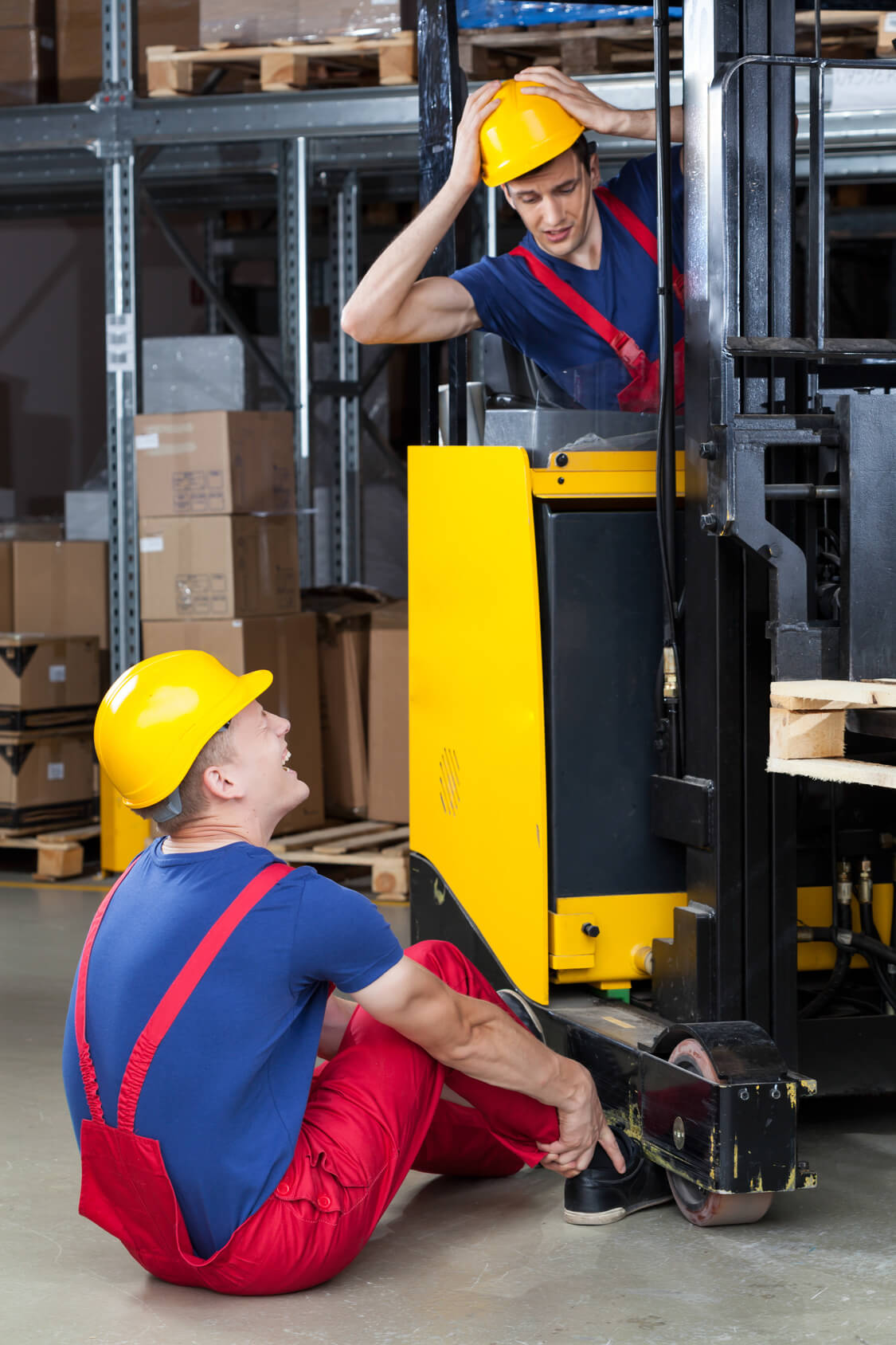
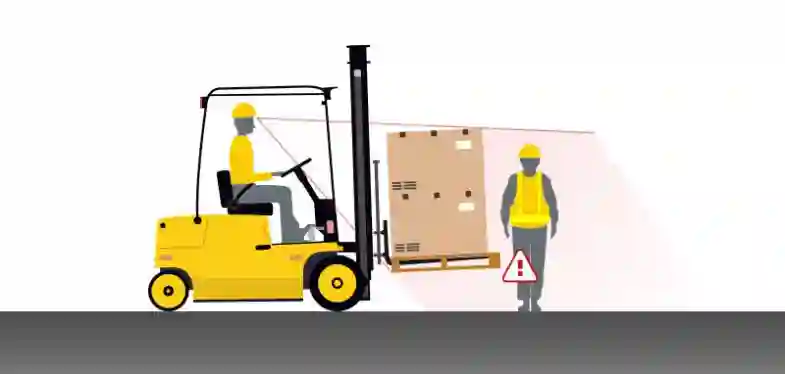
| The “Silent” Near-Miss | A forklift misses a pedestrian by inches at a blind corner; no one reports it. | Proximity Alerts Real-time audio warnings for the driver and automatic slowing of the vehicle. |
| Zone Creep | Operators take “shortcuts” through pedestrian-only lanes to save time. | Digital Geofencing AI triggers an instant alert to the supervisor and logs the breach for coaching. |
| The Lead Foot | Forklifts speeding during the “end-of-shift” rush to hit quotas. | Speed Governance Detects overspeeding and can interface with the vehicle to limit power. |
| Visible Fatigue | A driver is micro-sleeping or distracted by a phone after a long shift. | Monitoring (DMS) In-cab cameras detect drooping eyelids and alert the operator immediately. |
| Improper Load Handling | Traveling with forks raised too high or pushing one pallet with another. | Behavioral Analysis AI recognizes unsafe mast height and flags it for the next huddle. |
Why This Matters for Your LinkedIn Post:
If you’re sharing this with your network, emphasize that data-driven safety isn’t about “spying”—it’s about “supporting.” It gives teams the tools to fix a dangerous intersection before a collision ever occurs. It moves the conversation from “Who messed up?” to “How can we improve?”
If you’re sharing this with your network, emphasize that data-driven safety isn’t about “spying”—it’s about “supporting.” It gives teams the tools to fix a dangerous intersection before a collision ever occurs. It moves the conversation from “Who messed up?” to “How can we improve?”
