


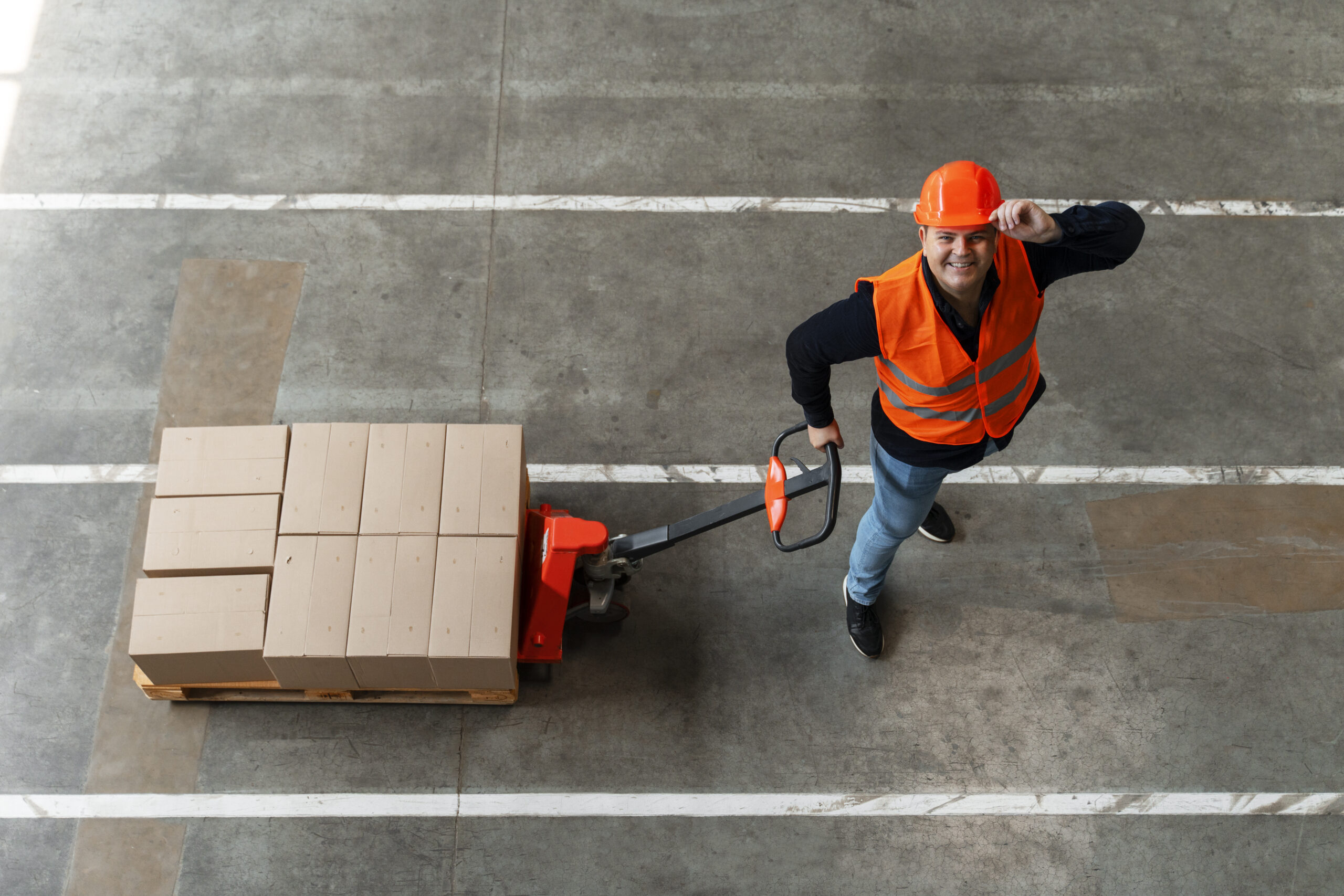
The Forklift Safety Revolution
From “Check-the-Box” to Competitive Edge
Modernizing warehouse safety for the 2026 landscape.
CONTACT US
For decades, forklift safety was seen as a regulatory “tax”—a series of posters, annual training sessions, and yellow lines on the floor meant to keep OSHA or local regulators at bay. However, as we move through 2026, a seismic shift has occurred.
The most successful warehouses no longer view safety as a compliance burden, but as a primary driver of operational efficiency. Here is why the industry has evolved and how modern technology is turning “safety” into a profit center.
1. Why the Shift? From Reactive to Proactive
The “Old Way” of safety was reactive. An accident would occur, a report would be filed, and the operator might be retrained. This model failed to address the underlying costs of downtime, damaged inventory, and rising insurance premiums.
Labor Scarcity: Losing an operator to injury—or even a near-miss—can derail a shift in an era where skilled labor is hard to find.
High-Velocity Logistics: Modern warehouses move faster than ever. Standard mirrors and “honking at corners” aren’t enough to prevent collisions in 24/7 environments.
Data-First Culture: Logistics managers now demand the same level of analytics for safety that they have for inventory turnover.
2. The Tech Stack: The Engine of Efficiency
Modern forklift safety is powered by an ecosystem of sensors and AI that does more than just beep.
- AI Collision Avoidance: AI-powered cameras distinguish between a static rack and a human being. They can automatically slow the vehicle down before the operator even reacts.
- Telematics & Cloud Connectivity: Every forklift is now an IoT device. Managers receive real-time alerts for high-speed turns, impacts, or unauthorized use.
- Dynamic Zoning: Using RFID or LiDAR, forklifts can be automatically speed-limited in high-pedestrian zones then “unlocked” for higher speeds in open transport lanes.
- Operator Health Monitoring: Facial recognition systems detect fatigue or distraction, prompting a break before an error occurs.
3. Impact & Outcomes: More Than Just “Zero Accidents”
When safety is integrated into the machine’s operation, the ripple effects go far beyond injury prevention:
Optimized Traffic Flow: Telematics data reveals “bottlenecks” where forklifts frequently brake or idle, allowing managers to redesign floor layouts for better throughput.
Predictive Maintenance: Impact sensors identify small bumps that might misalign the mast. Fixing these early prevents catastrophic mechanical failure during peak hours.
Operator Accountability: Digital pre-checklists ensure that no machine leaves the bay with faulty brakes or low fluids, ensuring 100% fleet readiness.
4. The ROI: Calculating the Value
Investing in advanced safety tech isn’t just about avoiding a fine; it’s a high-yield investment.
| Category | Impact | ROI Driver |
|---|---|---|
| Insurance | 15–25% reduction | Proven reduction in “high-risk” incidents. |
| Maintenance | 30% lower repair costs | Less aggressive driving and fewer impacts. |
| Inventory | ~20% reduction | Fewer dropped pallets and rack strikes. |
| Uptime | Elimination of downtime | No shift stoppages for accident investigations. |
The Bottom Line
The evolution of forklift safety has reached its final form: Invisible and Integrated. By moving away from manual compliance and toward automated, data-driven systems, businesses are proving that the safest warehouse is also the most profitable one.
Is your fleet still running on 20th-century safety standards, or are you ready to turn your safety data into a competitive advantage?

Author