

The High Cost of Outdated Safety KPIs: Are Your Metrics Punishing Innovation?
Warehouse Safety Just Stopped Being a Paperwork Problem
How Teknect.ai’s detection and monitoring stack turns near-misses into evidence, and evidence into better decisions on the floor.
The Ceiling We All Accepted
Every budget cycle, safety got the same treatment as office supplies — a line item reviewed once a year and trimmed whenever things got tight.
HSE showed up after the incident, not before it. It filed the report, updated the training log, and closed the file. Reactive by design, and nobody questioned the design.
That’s no longer the limit.
Not because attitudes changed overnight, but because the technology finally caught up with what safety teams have said for years: pedestrian-forklift incidents aren’t random. They’re patterned, they’re measurable, and they’re preventable.
Teknect.ai’s stack — the TK300 AI Anti-Collision System, Fleet Management System (FMS), Driver Monitoring System (DMS), FootShield Pro, doCheck, and UWB pedestrian detection — moves HSE out of the filing cabinet and into the room where operational decisions actually get made.
Why Passive Safety Falls Short
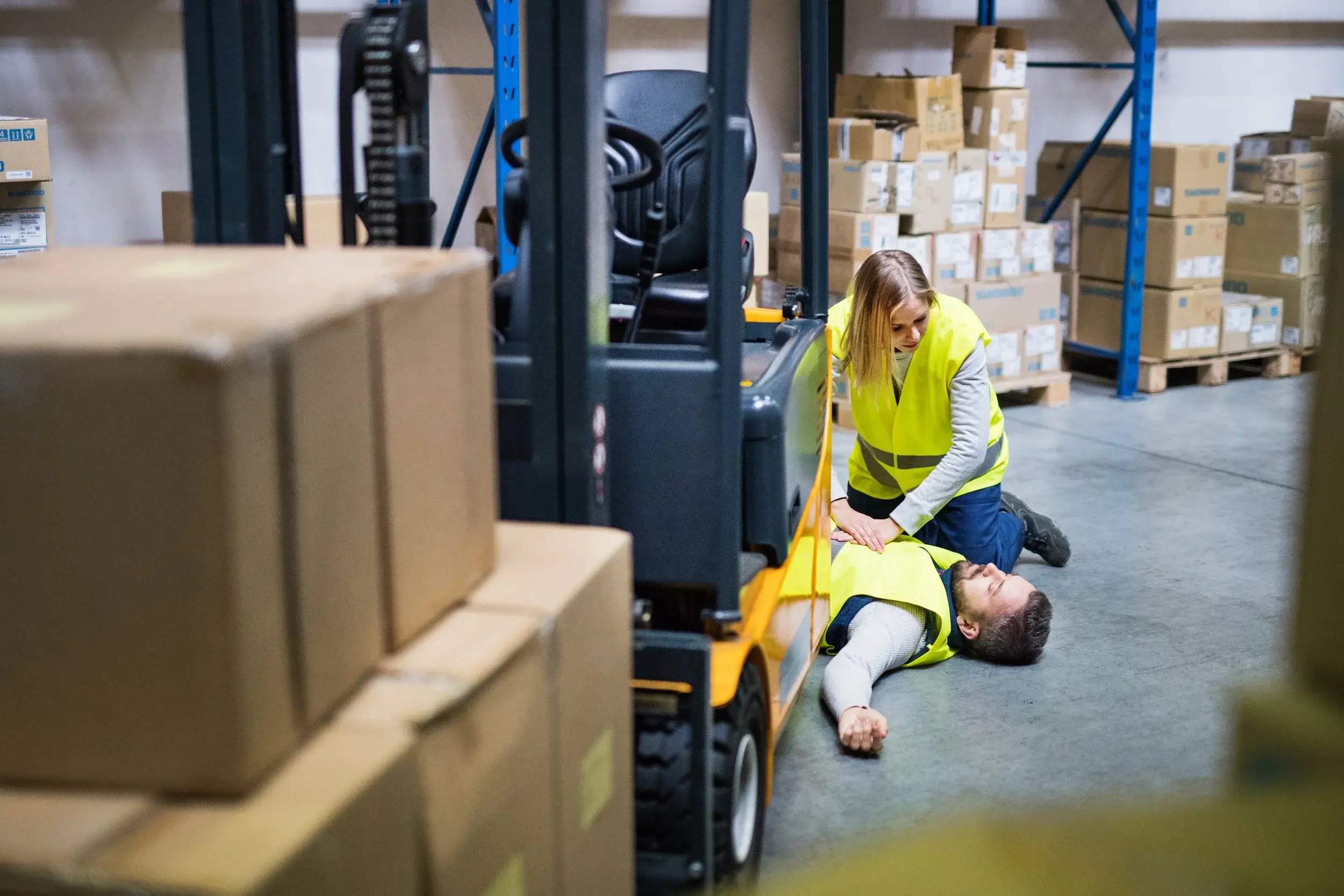
Most warehouse safety setups still lean on passive tools — corner mirrors, floor paint, backup alarms. They matter, but they all share one flaw: they depend entirely on a person reacting correctly inside a split second.
- Alarm fatigue: a standard alarm can’t tell a pedestrian six feet away from an empty aisle. Hear it fifty times a shift and you stop hearing it at all.
- Data that only looks backward: HSE’s job became documenting what already happened — filing recordables, running root-cause reviews after the fact.
- The risk nobody sees: near-misses go uncounted. If it didn’t end in an injury, it never made it into the data.
What Changes When Safety Is Live Data
The real breakthrough behind a system like the Teknect.ai TK300 isn’t the alarm — it’s the continuous log underneath it.
Computer-vision cameras paired with an intelligent controller tell pedestrians apart from static racking, flag warning-zone entries, and trigger auto-stops during reverse-travel exposure. Every event gets a timestamp and a record.
The moment safety data stops being an annual report and becomes a live stream, it stops being something you review — it becomes something you manage.
With a digitized fleet, HSE teams can see, instantly:
- High-risk zones — the aisles generating four times the near-miss rate of everywhere else.
- Behavioral patterns — reverse-travel incidents clustering around specific shift changes.
- Training gaps — surfaced by objective warning-zone triggers, not guesswork.
HSE Earns a Seat at the Strategy Table
When a safety manager walks into a meeting with a heat map of near-misses by aisle, shift, and driver, the conversation stops being about compliance and starts being about operational intelligence.
That level of visibility changes the financial conversation:
- Targeted investment: you know exactly where to put FootShield Pro pedestrian zones or UWB-based detection — not everywhere, just where it counts.
- Coaching backed by evidence: the Driver Monitoring System (DMS) catches fatigue, distraction, and phone use consistently, replacing hearsay with a record.
- Maintenance before breakdown: doCheck replaces the rubber-stamped paper checklist with a real digital pre-shift inspection, catching mechanical issues early.
Layer the Fleet Management System (FMS) over all of it, and operations leadership gets one dashboard linking fleet health, driver behavior, risk concentration, and throughput.
The Bottom Line
Real-time detection and logging do more than prevent injuries — they let a facility optimize layout, staffing, and workflow on hard evidence instead of guesswork.
An HSE function running on Teknect.ai’s stack isn’t a cost center defending the company from liability. It’s a value driver finding the friction that’s already costing you money.
Prevention stopped being a compliance requirement. It’s a performance lever now.
Ready to see what that looks like inside your own facility?
Let’s talk
Reach out to our team at sales@teknect.ai to see what this looks like in practice for your operations.
Get in touch — sales@teknect.ai