


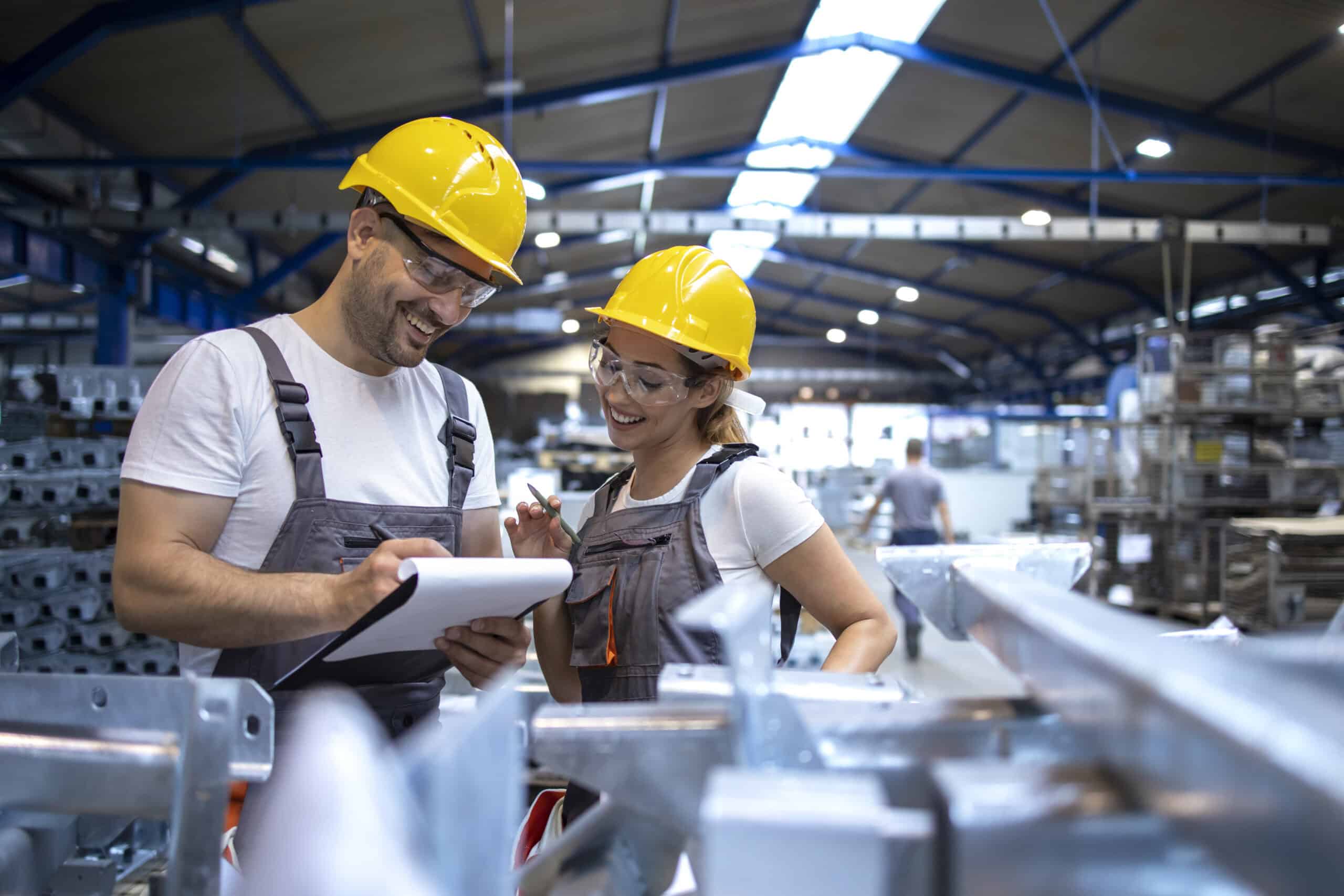


AI Moves Us From Reporting What Happened to Detecting What Is About to Happen
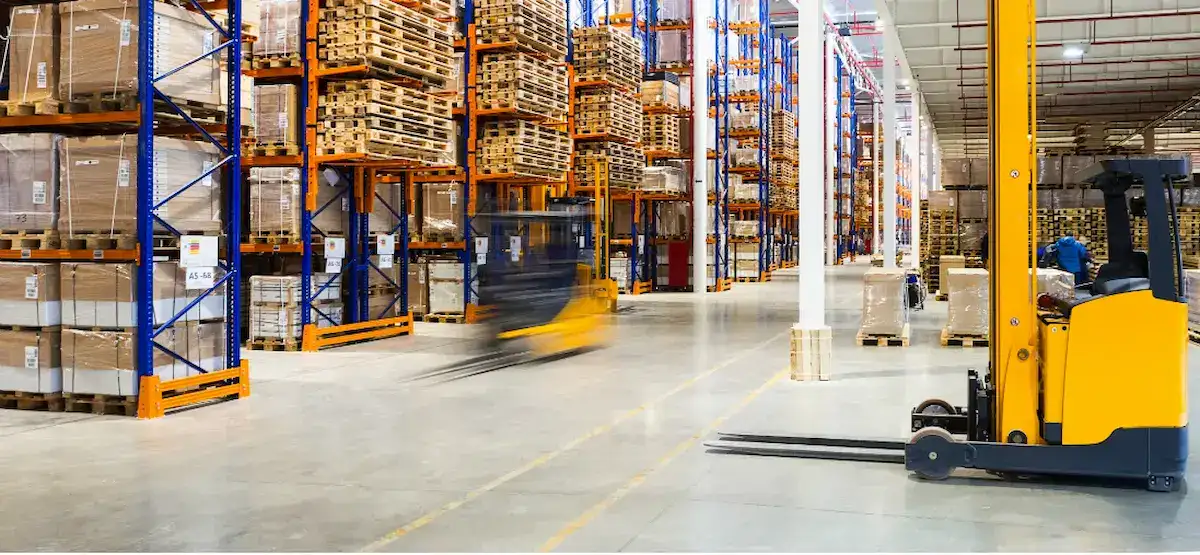
How Does AI Move Workplace Safety From Reactive to Predictive?
For most of my career in safety, the job has started with a phone call that nobody wants to receive.
A near miss at the dock. A forklift clipping a racking upright. A pedestrian who stepped out from behind a pallet stack at exactly the wrong moment.
What follows is familiar to every safety professional: we investigate, we interview, we trace root causes, we review the lagging indicators, and we update the procedure so that “it never happens again.” That discipline is vital. But reporting the past only protects the future if we can anticipate what is coming around the corner, and on a busy shop floor the corner arrives faster than any monthly report can.
At Teknect.ai, we believe the future of safety is not simply better documentation. It is foresight. See how our AI-powered forklift safety solutions and fleet management platform put that into practice.
Why Traditional Safety Management Stays One Step Behind
Conventional safety programs are built around events that have already occurred. Incident rates, recordables, lost-time injuries and audit findings all tell us how we performed yesterday. They are essential for accountability, yet they share three structural limitations:
- They Are Delayed: By the time a trend appears in a quarterly report, the conditions that created it have often been repeated hundreds of times.
- They Are Incomplete: Near misses go unreported, blind-spot encounters go unseen, and unsafe behaviours that did not cause harm leave no trace at all.
- They Are Reactive by Design: Each corrective action responds to a specific failure rather than to the pattern of risk building quietly underneath it.
The result is a program that is excellent at explaining incidents and far less equipped to prevent the next one.
The Shift in Modern Safety
Artificial intelligence changes the question we ask. Instead of “What went wrong?”, we can begin asking “What is about to go wrong, and how do we stop it now?” That shift shows up in three ways.
1. From Lagging to Leading
Connected sensors, cameras and vehicle telematics capture real-time insight: speeds in congested aisles, proximity events at intersections, repeated close calls at the same blind corner. Leading indicators let us intervene while risk is rising.
2. From Noise to Signal
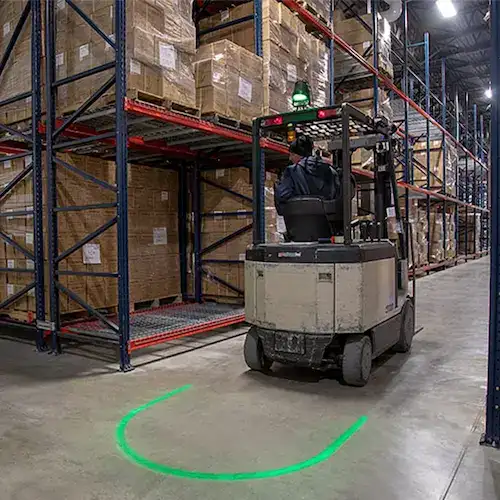
Intelligent systems isolate the true risk factors, telling a pedestrian walking a marked path from one stepping into a forklift’s travel zone, so every alert carries meaning and operators stop ignoring them.
3. From Compliance to Confidence
Compliance means we met the minimum standard. Confidence means we understand our operation well enough to stay ahead of it, moving safety professionals from gatekeepers to strategic advisors.

| Area | Traditional (Reactive) | AI-Powered (Predictive) |
|---|---|---|
| Metrics | Lagging indicators that describe yesterday | Real-time leading indicators |
| Data | More noise, more alerts, more fatigue | Isolated, meaningful risk signals |
| Safety Role | Gatekeeper enforcing rules after the fact | Strategic advisor with evidence in hand |
| Outcome | Compliance | Confidence |
What Foresight Looks Like on the Floor
For operations and facilities managers, predictive safety is not abstract. It looks like this:

Each of these capabilities converts what used to be an invisible risk into a visible, manageable one.
Safety as an Operational Advantage
When you can detect a hazard before it materialises, safety stops being a checklist and becomes a core operational advantage. Fewer incidents deliver gains well beyond compliance:
- Operations: Less downtime and fewer damaged assets.
- Financials: Lower insurance and claims exposure.
- People: A workforce that trusts its environment.
- Decisions: Better data on layout, staffing and equipment, improving productivity alongside protection.
Safety and performance stop competing for the same budget and start reinforcing each other.
Foresight is the only true competitive edge in safety.
Technology does not replace the safety professional; it amplifies their impact tenfold.
That amplification is the point. AI does not make judgement calls about culture, leadership or people. It gives the professionals who do make those calls a clearer view of what is happening and what is likely to happen next.
Moving From Reacting to Anticipating
If your team is beginning this journey, a practical starting point is to ask three questions:
Question 1
Where are we relying only on lagging indicators to understand risk?
Question 2
Which high-risk interactions, such as forklift and pedestrian traffic, are we currently unable to see in real time?
Question 3
How much time do our safety professionals spend documenting the past rather than shaping the future?
The answers usually reveal exactly where foresight will deliver the greatest return.
How Is Your Team Anticipating Incidents?
How is your team shifting from reacting to incidents to anticipating them? Share your experience in the comments below. We would value hearing what is working on your floor and what challenges remain.
